






We are Globally Trusted Company Certified from JAS-ANZ, WHO GMP, ISO 9001:2015, Organic, ECO CERT, GC or GC/MS Technologies, and Organic Farmers & Growers Association. We mainly export our products to USA, France, Canada, Australia, Switzerland, Thailand, South Africa, Europe, & many other Countries.

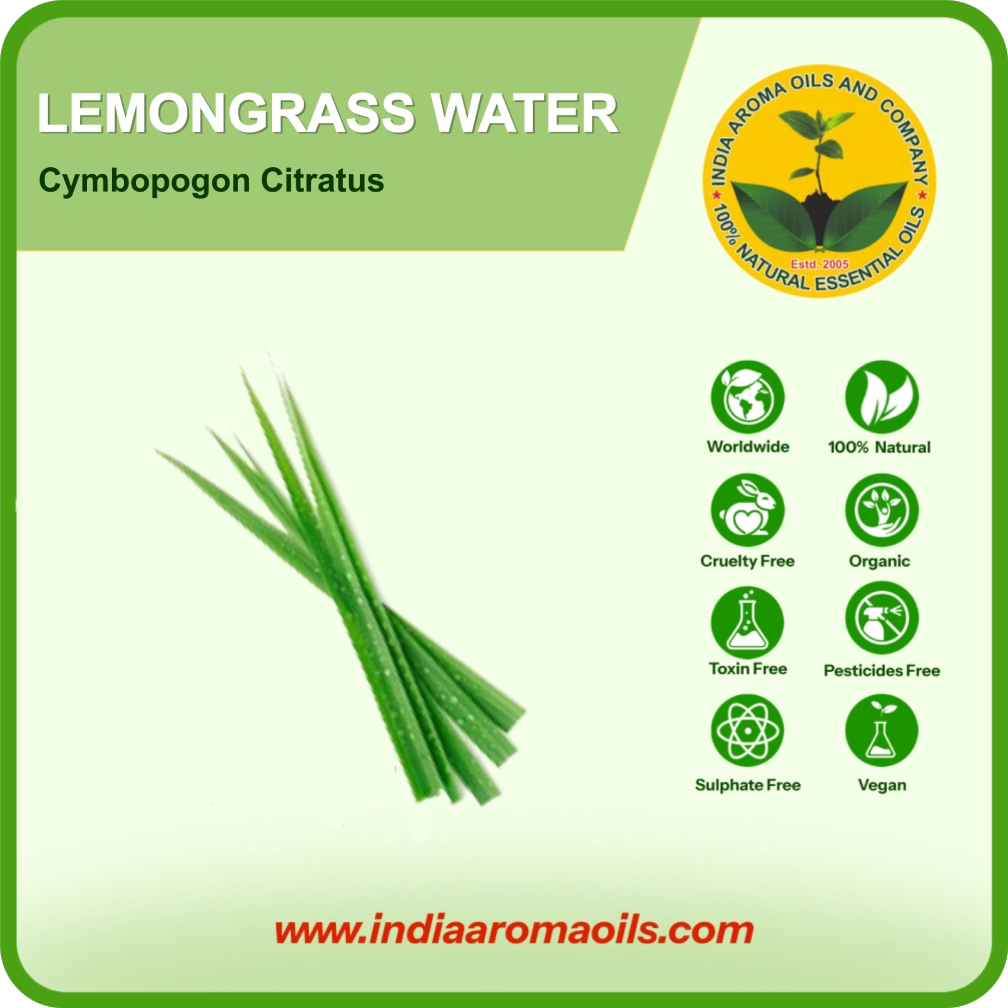
Lemongrass Water

Botanical Name: Cymbopogon Citratus

Price range: $5.00 through $158.90

Payment Method

Our Certifications

Our Certifications

Description

DESCRIPTION:
Known by the botanical name Cymbopogon citratus, lemongrass is a genus of about 55 species of grasses. It has citrus flavor and can be used in dried, powdered, or even used in fresh form. Lemon Grass Oil also finds usage as a pesticide and preservative.

CONSTITUENTS:
Some of the constituents of Lemongrass include essential oils (including terpineol, myrcene, citral (its most active ingredient), citronellol, geraniol and limonene, among others), alpha-pinene, beta-sitosterol, coumarin, tannin and ursolic acid.

AROMATIC SUMMARY / NOTE / STRENGTH OF AROMA:
A fresh aroma and has a very fresh, citrus-like aroma

BLENDS WITH:
Shrimp, chilli pepper, cilantro, chicken, basil, kaffir lime, crab and scallops.

COMMON NAMES:
lemongrass, lemon grass, barbed wire grass, citronella grass, silky heads, cha de Dartigalongue, Hierba Luisa or Gavati Chaha, fever grass.

USES:
The extract is used as an herb in Asian cuisine. Some of the common usage includes in teas, soups, curries, poultry, fish, seafood. Lemon Grass Oil is also used as pesticide and preservative especially for old manuscripts as it has anti-fungal properties.

SpecificationValue
Botanical NameCymbopogon Citratus
CAS #8007-02-1
Country of OriginIndia
Color & OdorColorless clear liquid with Characteristic lemongrass odor
SolubilityInsoluble in alcohol and oils. Soluble in water
Specific Gravity0.86900 – 0.89000 @ 25°C
Optical Rotation-5° to +1°
Refractive Index1.47900-1.48900 @ 20°C
Flash Point92°C
Ph value3.00 - 6.00 @ 20°C
Essential Oil Content>0.025%
Plant Part UsedLeaves
Extraction MethodHydro Distillation
  • Keep the product away from children and animals.
  • Keep it away from eyes.
  • During pregnancy, further safety precautions should be taken (especially during the first trimester).
  • Avoid applying undiluted essential oils to your skin (except where indicated).
  • Avoid ingesting essential oils.
  • When sunbathing, avoid applying essential oils to the skin.
  • While taking homeopathic medications, certain essential oils shouldn't be utilized because they could have the opposite effect.
  • Essential oils may cause an allergic reaction in certain individuals.
  • Always consult a professional if you are unsure about the proper usage.