We are Globally Trusted Company Certified from JAS-ANZ, WHO GMP, ISO 9001:2015, Organic, ECO CERT, GC or GC/MS Technologies, and Organic Farmers & Growers Association. We mainly export our products to USA, France, Canada, Australia, Switzerland, Thailand, South Africa, Europe, & many other Countries.
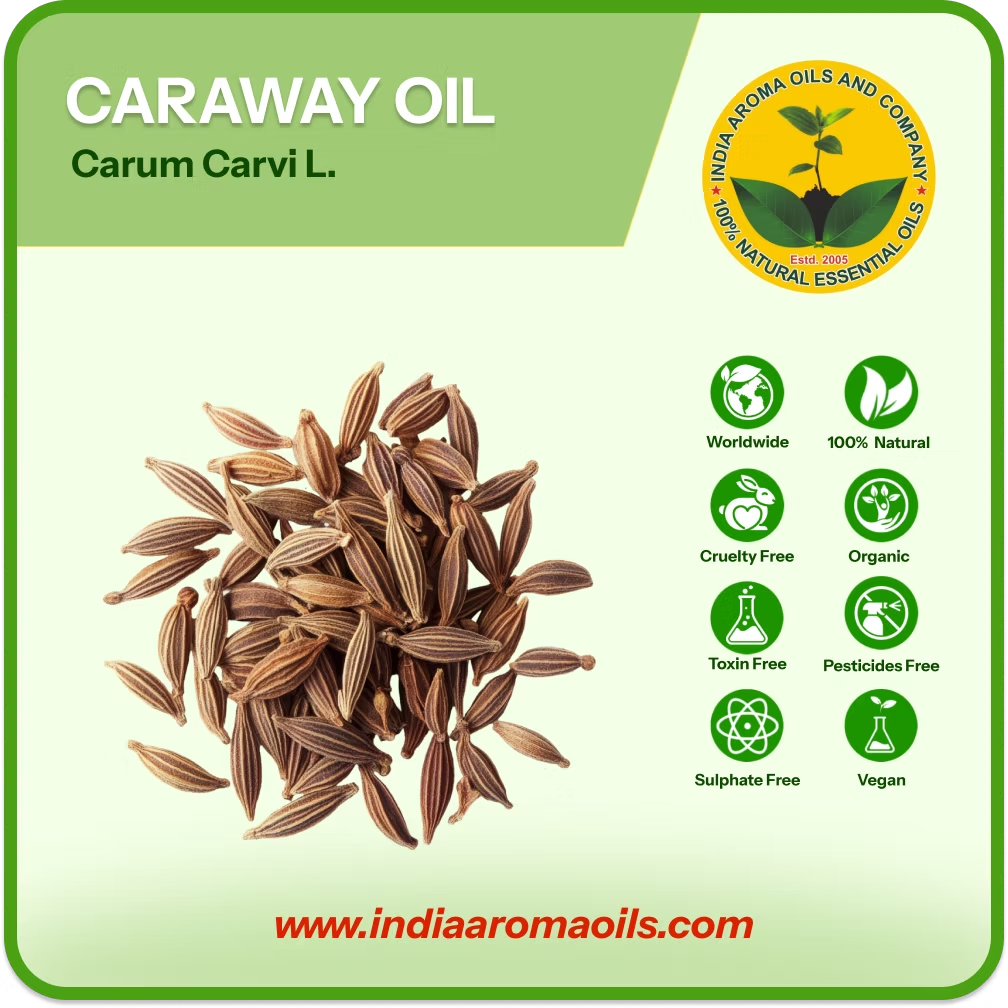
Caraway Oil is sourced from bi-annual Carum carvi herb which is commonly referred as Apium carvi. This herb belongs to Umbelliferae class. This herb grows pink or white flowers, leaves having fern like appearance and brownish small fruits. The oil is derived from the dried seeds of this herb via steam distillation method.
CONSTITUENTS:
Caraway oil contains compounds like Furfurol, aldehyde, Carvone, Acetaldehyde, Limonene and Cumuninic.
AROMATIC SUMMARY / NOTE / STRENGTH OF AROMA:
This volatile oil has long lasting middle note fragrance which is sweet and has touch of spicy smell that resembles to the aroma of pepper.
BLENDS WITH:
Caraway essential oil mixes with other essential oils of ginger, chamomile, coriander, orange lavender, frankincense and Basil.
COMMON NAMES:
Caraway oil is popularly known as Caraway Essential Oil.
USES:
The soothing smell of this essential oil helps to relieve mental stress and tiredness. Caraway Oil is an excellent remedy for health complications like colic, flatulence, digestive disorders caused by stress on nerves, gastric spasm and stomach problem. As effective expectorant, Caraway oil is beneficial for treating cough, bronchitis and asthma. It has proven effectiveness in treating laryngitis and sore throat condition. Its diuretic attributes helps to remove toxic content from body via urination.
Specification
Value
Botonical Name
Carum carvi
CAS #
8000-42-8
Country of Origin
Egypt
Color & Odor
Colorless to pale yellow liquid with Fresh sweet spicy odor
Solubility
Insoluble in water, soluble in alcohol and oils
F.E.M.A. #
2238
Specific Gravity
0.895 - 0.958 @ 20°C
Optical Rotation
+57° to +82°
Refractive Index
1.485 – 1.492 @ 20°C
Flash Point
63°C
Major Constituents
Carvone
Plant Part Used
Seeds
Extraction Method
Steam Distillation
Keep the product away from children and animals.
Keep it away from eyes.
During pregnancy, further safety precautions should be taken (especially during the first trimester).
Avoid applying undiluted essential oils to your skin (except where indicated).
Avoid ingesting essential oils.
When sunbathing, avoid applying essential oils to the skin.
While taking homeopathic medications, certain essential oils shouldn't be utilized because they could have the opposite effect.
Essential oils may cause an allergic reaction in certain individuals.
Always consult a professional if you are unsure about the proper usage.