






Bitter Almond Oil

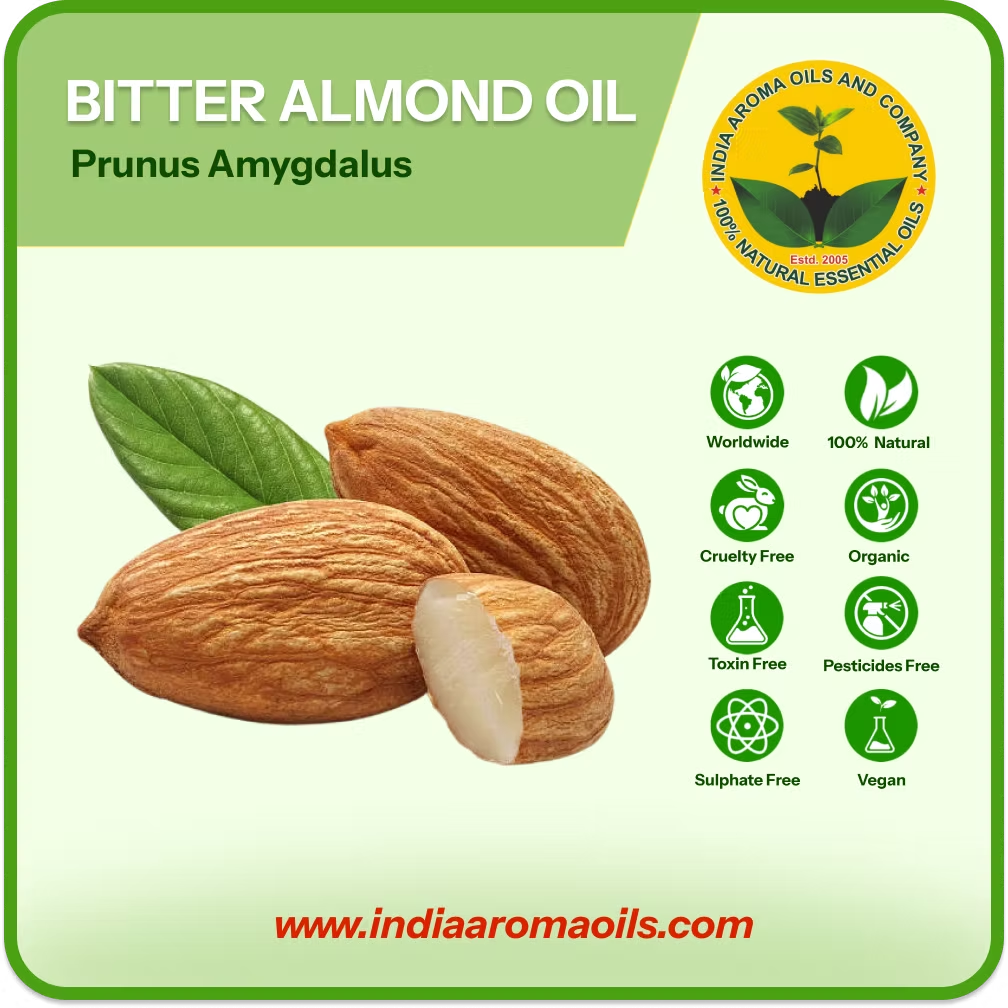
Botanical Name: Prunus amygdalus

Price range: $3.00 through $786.00

Payment Method

Description

DESCRIPTION:

Highly refractive Bitter Almond Oil is notable for its translucent, pale yellow or colorless form. This light oil has distinctive smell and it tastes bitter. It easily dissolves in ether and alcohol and disperses in water under 15 degree C temperature. It can be even mixed with nitric acid under normal temperature to generate nitrous steam.

CONSTITUENTS:

Bitter Almond Oil is enriched with compounds like arginine, leucine, amygdalin, phenylalanine, benzaldehyde, lysine and valine.

AROMATIC SUMMARY / NOTE / STRENGTH OF AROMA:

The fragrance of this oil is similar to the smell of almond kernel and cherry.

BLENDS WITH:

Bitter Almond Oil is suitable to be mixed with Apricot, Cassia and Orange extracted oils.

COMMON NAMES:

Bitter Almond Oil is also referred as bitter almond essential oil, vitamin B17, almond milk, amygdale amara, sweet almond, almond oil, ku wei bian tao, bitter almond, laetrile, volatile almond oil, bitermandel, amygdalin and oil of almonds.

USES:

The application of this aromatic essential oil can be noticed in cosmetic industry where it is used for formulating creams. Due to its therapeutic properties, this oil is used as suitable local anesthetic agent, antibacterial agent, muscle relaxant and anti itching medium.

SpecificationValue
Botonical Name Prunus amygdalus
CAS # :8013-76-1
Country of Origin Western Asia and North Africa
Color & Odoryellowish color & characteristic odor
Solubility Soluble in ethanol, ether, oil and propylene glycol
F.E.M.A. #2046
Specific Gravity 1.063 - 1.073 @ 25°C
Optical RotationN/A
Refractive Index 1.543 - 1.558 @ 25°C
Flash Point >100°C
Major Constituents :benzaldehyde
Plant Part UsedSeeds
Extraction Method Cold Pressed
  • Keep the product away from children and animals.
  • Keep it away from eyes.
  • During pregnancy, further safety precautions should be taken (especially during the first trimester).
  • Avoid applying undiluted essential oils to your skin (except where indicated).
  • Avoid ingesting essential oils.
  • When sunbathing, avoid applying essential oils to the skin.
  • While taking homeopathic medications, certain essential oils shouldn't be utilized because they could have the opposite effect.
  • Essential oils may cause an allergic reaction in certain individuals.
  • Always consult a professional if you are unsure about the proper usage.

    Our Certifications